What to check before booking an atv quad bike dubai ride
@getatvquadbikedubaispot
Booking an atv quad bike dubai ride should feel straightforward, but a few details make a real difference once the day arrives. The desert is not a flat car park. Sand shifts, light changes, and routes can feel very different for a first rider compared with someone who has spent years on quad bike types. Before paying attention to timing or choosing a slot, look at the practical points that affect comfort, control, and the overall experience.
A good booking decision starts with the rider, not the vehicle. Think about who is going, how confident each person feels on uneven ground, and whether anyone prefers a slower pace. A guided tour can suit newcomers because the route and pace are managed, while experienced riders may want more open riding. Be honest about ability early, since that helps avoid a mismatch between expectations and the actual ride.
Rider requirements and fit
Check the age rules, driving experience expectations, and any restrictions for passengers before committing. These details vary by operator and by vehicle class, so they are worth confirming at the time of booking rather than guessing. Rider size matters too. A quad bike should feel manageable when seated, with handlebars and controls that do not force the rider into an awkward position.
Physical comfort is part of the decision. Desert riding can involve vibration, turns, braking, and changes in body position over a sand dune. Anyone with back, wrist, shoulder, or knee concerns may want a calmer route and shorter session. That is not a negative choice. It is a sensible way to keep the ride enjoyable and reduce the chance of fatigue affecting control.
The type of ride and route
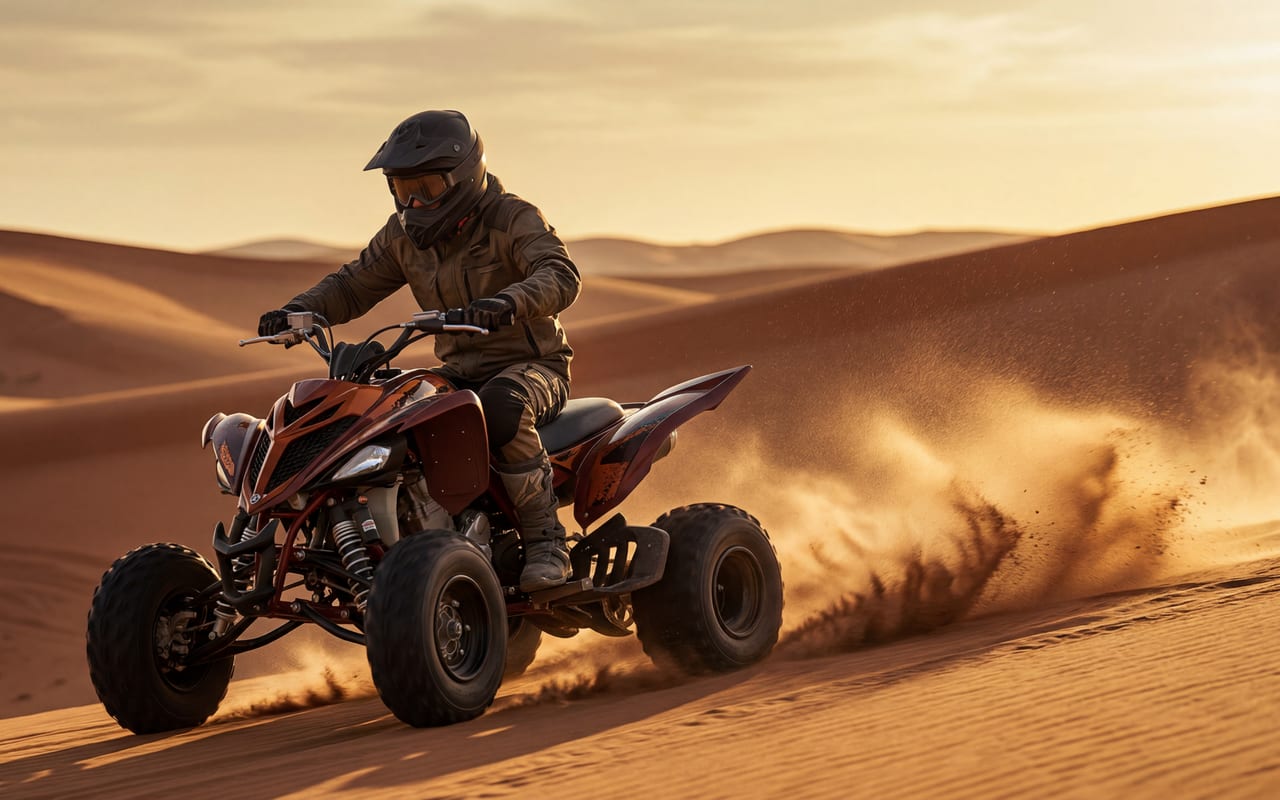
Not all rides in the desert have the same character. Some focus on open desert terrain and steady cruising. Others include dune bashing elements, tight turns, or more technical sections where speed needs to stay low. Ask what the route is like in plain terms. Words such as beginner friendly, moderate, or advanced are useful only if they are explained clearly.
Pay attention to the balance between riding time and other parts of the experience. A package may include transport, photo stops, short breaks, or a wider desert programme. Those extras can be appealing, but they should not crowd out the riding time if the main reason for booking is the quad bike itself. A clear schedule helps everyone know what they are agreeing to.
Safety gear and basic protection
Safety gear deserves direct attention before a booking is confirmed. A helmet that fits properly is the starting point, and gloves can improve grip and protect hands from vibration and sand. Eye protection is also useful in open desert terrain, where dust and loose sand can be kicked up by other riders. Closed footwear with a firm sole is a practical choice, since sandals and smooth soles can slip.
Clothing should suit both heat and movement. Lightweight layers can help with sun exposure, while loose scarves or dangling accessories can catch unexpectedly. Riders should also avoid carrying loose items in pockets. The aim is not to look dramatic for photographs. The aim is to stay comfortable, visible, and able to control the bike throughout the ride.
Some riders compare operators while researching atvdubaidesert.com alongside other names. That comparison works best when the questions are consistent: what is included, how the route is managed, what gear is provided, and what happens if conditions change. Clear answers before booking usually lead to fewer surprises on the day.
Supervision and riding rules
Find out how the ride is supervised. A guided tour should give clear briefing, route guidance, and signals for stopping or slowing. Riders need to know what to do if they become separated, if another bike stops, or if the group approaches a difficult section. A short explanation at the start is far more useful than assumptions made in the middle of a ride.
Speed limits and group rules matter more in the desert than many people expect. Sand can hide dips, rocks, and sudden changes in grip. Riding too fast reduces reaction time and makes a simple mistake harder to correct. A responsible operator will set limits that suit the terrain and the group, and those limits should be treated as part of the experience, not as an obstacle to fun.
Condition of the bike and simple pre-ride checks
Before the ride begins, take a calm look at the bike you have been given. Check that the handlebars feel secure, the brake levers respond, the tyres look properly inflated, and the seat is firmly in place. Look for anything obviously loose, damaged, or unusually worn. If something does not look right, say so before leaving the starting area. A few quiet minutes at the start can prevent a problem later.
Do not try to adjust mechanical parts you do not understand. Components such as brakes, suspension, and steering should be handled by a qualified professional. A rider's job is to notice clear warning signs and report them, not to improvise repairs in the sand. A bike that feels unstable, pulls sharply to one side, or has a brake that feels weak should not be treated as a minor inconvenience.
Desert conditions and timing
Weather affects the ride more than many first time visitors expect. Midday heat can make long sessions uncomfortable, while low light near sunset changes depth perception on uneven sand. Wind can lift sand and reduce visibility. After rain or heavy use, the surface may feel softer in places and harder in others. None of these factors automatically rules out a ride, but they shape the right pace and clothing.
Ask how conditions are assessed on the day. Good planning leaves room for a route change, a slower pace, or a delayed start if the terrain is not suitable. A ride that adapts to conditions is usually safer and more enjoyable than one that follows a fixed plan regardless of the sand, heat, or visibility.
Booking terms and what is included
Read the booking details carefully before paying. Confirm the session length, meeting arrangements, included gear, route type, and whether there are any rules about photos, refreshments, or extra activities. Keep the wording simple in your own notes. If a detail is unclear, ask for a direct answer rather than filling the gap with assumptions.
It also helps to check how changes are handled. Plans can shift because of weather, transport, or group needs. Understanding the basic approach to changes before booking avoids awkward conversations later. The name atvdubaidesert.com may come up while comparing options, but the same practical questions should still be asked wherever the booking is made.
A well chosen ride is not just about power or scenery. It comes down to fit, route, supervision, gear, bike condition, and honest planning for desert conditions. Work through those points in order, and the booking decision becomes much easier. By the time the ride day arrives, the main thing left to think about is enjoying the sand, the space, and the steady rhythm of the bike beneath you.